THE IMPACT OF SOCIAL MEDIA ON SUICIDE RATES 2010 - 2019

Project links
Skills
About this project
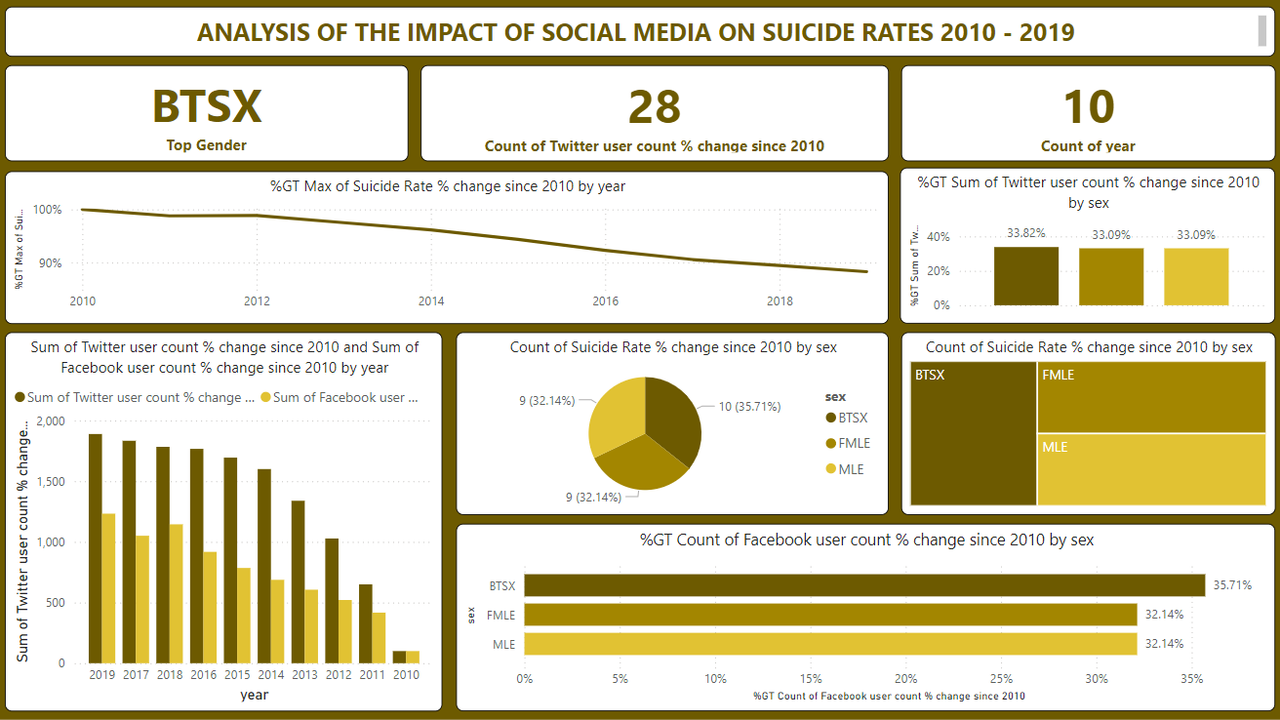
Having compared the suicide rate son both Facebook and Twitter within a 10year gap (2010 - 2019), the following observations and recommendations were made
- A steady decline in suicide rate was observed on the line chart. It goes from 100% in 2010 and consistently dropped upto 88.3% in 2019 which shows an overall improvement over the ten year window.
- This steady yet slow decrease in the percentage of suicide rate could also indicate that despite these progresses recorded, there might be obstacls that prevent these reductions from being rapid
- The BTSX category recorded a higher growth rate of suicide when compared with the regular male or female gender.
- An equal suicide rate for both male and female gender was also observed which goes to show that the vulnerability that has led to this suicide cases were not gender specific.
- Twitter recorded more cases than Facebook for all years recorded; for example, a total count of 1888 cases as against Facebook that recorded 1232 which suggests a better traction rate by twitter or twitter usersare more under pressure/depression that led to suicide.
However, the following recommendations have been made to help curtail and improve a repition or increase on the suicide rates and are as follows;
- It will be of importance to investigate the strategies that has allowed for such positive growth and capitalise on them for more results.
- Analyse social media trends that spring up occasionally and critically investigate that these trends are devoid of factors that could contribute negatively to these issues.
- Considering the high rate of suicide cases by the BTSX (beyond the sex binary) it would be advised that social media authorities collaborate with mental awareness groups to educate and create safe spaces for these individuals which includes both male and female gender.
- Both communities (Facebook and Twitter) can also collectively improve on guidelines and principles that encourage inclusivenss, allow collaborative contents and promote campaigns of self and mental health awareness.